The Journey from Being Self-Published to Traditionally Published
Saira Sheikh, author, entrepreneur, and mental health advocate, reflects on the lessons of finding her readers, building a community, and learning the business of books.
Opinions expressed by Entrepreneur contributors are their own.
You're reading Entrepreneur Middle East, an international franchise of Entrepreneur Media.
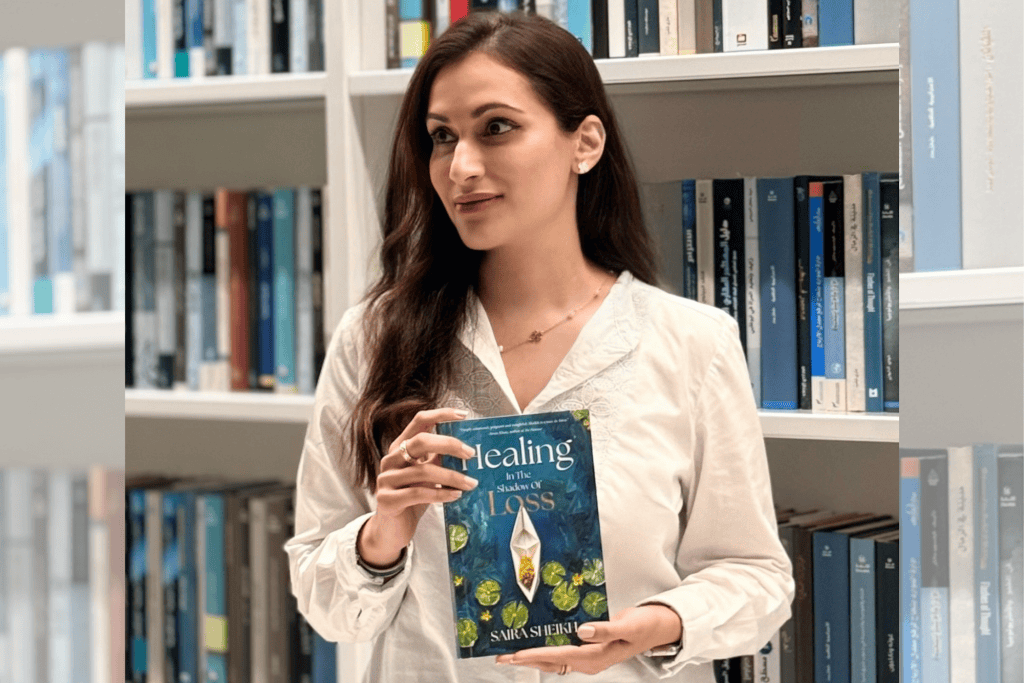
“Healing in the Shadow of Loss” traces the quiet, complicated work of grieving within a family and culture that rarely lets grief exist on its own terms. The book is a candid excavation of grief and what it demands of us, especially when culture and tradition shape how it is allowed to look. But beneath the storytelling lies another story of determination, a story of my own resolve.
I self-published this book first, and through grit and belief in my own voice, ultimately earned a traditional publishing deal. A result of what it takes to keep going when you believe in what you’ve written.
“It didn’t start as a book in my mind.”
Typically, a writer sits down and writes for their readers. My book started as pages I had been journaling for myself, quietly, for six years with no reader in mind, and no plan to ever turn those pages into anything.
The realization came unexpectedly, when I was asked to share my journey with a few close friends and community. I remember sitting down, trying to figure out how I’d tell this story in a single hour of open conversation. The task felt impossible.
That night, it struck me that I had far more to say than I’d realized. Strangely enough to write a book! That was the moment everything shifted. It wasn’t a decision I arrived at deliberately, it was one that somehow landed on me. That one session, where I’d only meant to share a fraction of my thoughts and my journey, told me everything I needed to know. I understood that others could relate to this. My vulnerability, once I let it show, gave them permission to show theirs too. It sparked conversations that many had found difficult to put into words, it offered motivation, and for some, the nudge they needed to begin their own healing journey.
I took the leap with nothing behind me. No industry connections, no agent, and barely a presence online. What I did have, was a raw manuscript which slowly took form out of six years of continuous entries in a diary, and a determination that refused to let that be the end of the story.
Being an expat in Dubai added its own layer of complexity. The idea had support, and the community around me was encouraging. But the market here is heavily dominated by independent, vanity, and hybrid publishers, with little in the way of traditional publishing infrastructure. So I had to look outward, piecing together the rules of an industry I was standing outside of.
The gray zone of getting published
The first real education was learning to tell the difference between vanity publishing, self-publishing, and traditional publishing. Three paths that get spoken about as if they’re interchangeable and are “not.” I made a deliberate choice early on to avoid the vanity route entirely.
But, self-publishing turned out to be its own maze. Going through a publishing house meant searching for the right fit, one that would not dilute or alter the book and the voice behind it.
Along the way, I heard the same warnings on repeat. That non-fiction is a harder sell than fiction. That self-help doesn’t resonate with people from where I come from. That I should consider a different market altogether. One person in the industry even told me that my book would not sell to this audience.
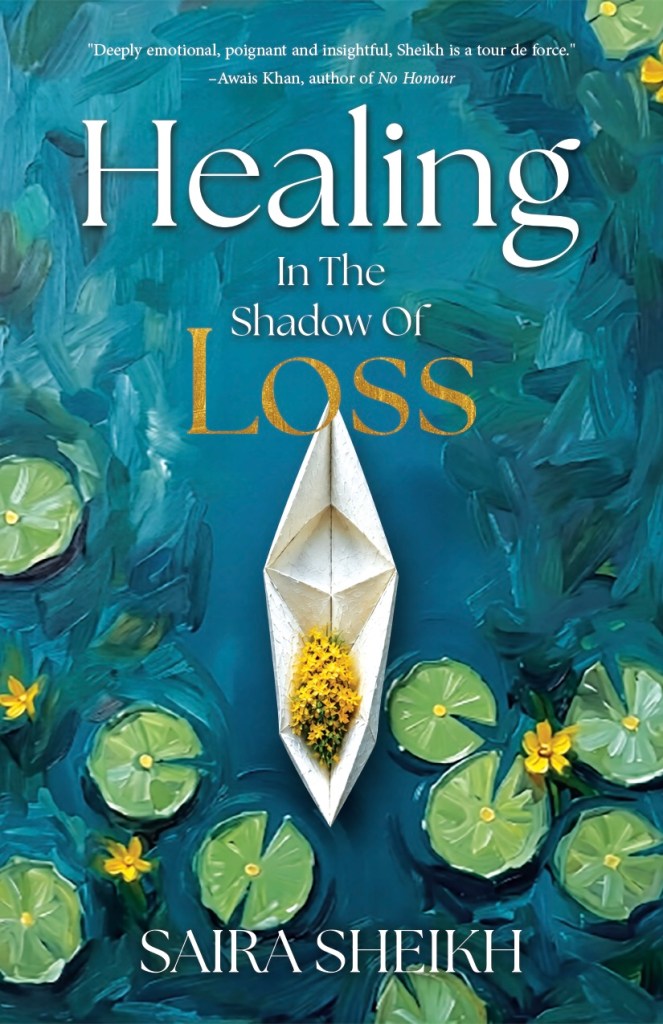
Despite the discouragement and the rejections that followed, I chose to publish. I believed that I wasn’t the only one who had lived through what the book describes. My book was never a conventional self-help title. It was personal experience, told in a way that let other people recognize themselves in it, especially from a South Asian perspective.
I wanted readers to feel held, seen, and validated. I did not want to give them an instruction manual like most self help books I picked up did. That distinction mattered more than any warning I was given.
Self-publishing with Amazon KDP came with regional restrictions that nobody prepared me for. I had to work them out on my own, piece by piece. And once the book existed in the world, I discovered that publishing it was only half the climb. Marketing and distribution were a whole second mountain, one I hadn’t expected.
Healing with intent
Somewhere in that period, “healing with intent” stopped being just a phrase in my book and became the way I carried myself. As a philosophy and as a practice. I made a deliberate choice about how I wanted to show up for my readers. Someone who had done the work, who was carrying it forward, and extending a hand to others walking the same path.
That distinction shaped everything that came after. It shows in how I wrote it, how I marketed the book, and how I spoke about it publicly. I wasn’t asking readers to grieve alongside me. I was offering something steadier and a proof that it’s possible to come out the other side of the messiness with intent, and to help someone else find their way through it too.
Self-publishing was not a backup plan
There’s a version of this story where self-publishing reads as a consolation prize. I didn’t self-publish because I assumed no publisher would take the book. I self-published because I could see, clearly, that the industry wasn’t ready for it yet, but I wasn’t willing to wait for permission to share it.
So I built it. My own audience, my own platform, my own readers, one at a time. That foundation is exactly what opened the doors that followed.
About a year after I self-published, I heard back from a traditional publisher I had sent my manuscript to. I’ll admit I hadn’t seen that coming. I had assumed a self-published book was a closed chapter and that no one would want to publish something that had already had its run. So, I had been told.
But this was different. It was evidence that the book had reached people, sparked conversations, and genuinely resonated with a readership the industry had told me didn’t exist. I didn’t walk into that deal with just a manuscript and just an open hand. I walked in with an existing audience and a community that had already formed around the work. That evidence is what changed the terms of the conversation. The publisher wasn’t taking a chance on an unknown, they were responding to something that had already proven itself.
Another year of multiple revisions and edits later, the traditionally published second edition was born, embracing shelves of bookstores and libraries and on Amazon worldwide.
What I want other writers to take from this
My self-publishing years were never a detour from the “real” path. They were the evidence I built, deliberately, so that when I finally sat across from a publisher, I wasn’t asking for just a chance, I was presenting a case.
If there’s one thing I’d say to a writer standing where I once stood, “build what’s yours before you wait for a deal to hand you a stage.” Your platform, your audience, your community.
Settling was never an option for me. I wanted bigger rooms, and a bigger audience to walk into them with. This is proof that the road from self-published to traditionally published isn’t a myth, and it isn’t just luck, it’s something you build with intent, one reader at a time.
“Healing in the Shadow of Loss” traces the quiet, complicated work of grieving within a family and culture that rarely lets grief exist on its own terms. The book is a candid excavation of grief and what it demands of us, especially when culture and tradition shape how it is allowed to look. But beneath the storytelling lies another story of determination, a story of my own resolve.
I self-published this book first, and through grit and belief in my own voice, ultimately earned a traditional publishing deal. A result of what it takes to keep going when you believe in what you’ve written.
“It didn’t start as a book in my mind.”

Saira Sheikh • Author, and founder of Glam Accents
Saira Sheikh is a multicultural author, entrepreneur, and mental health advocate whose unique global perspective... Read more