Why the Next Chapter of Global Trade Will Be Defined by Connection
Capital is spreading across more markets than ever before. The advantage now belongs to the economies and businesses that can link them.
Opinions expressed by Entrepreneur contributors are their own.
You're reading Entrepreneur Middle East, an international franchise of Entrepreneur Media.
For decades, global investment followed a familiar playbook of finding the most competitive location, concentrating production and optimizing around it, but that playbook is evolving.
Businesses are increasingly spreading investment, manufacturing and sourcing across more markets – not simply to manage risk, but to access new sources of growth, build greater flexibility and position themselves closer to their customers.
As a result, the question facing business leaders is changing. It is no longer simply where to invest, but how to develop a value chain that connects the markets in which businesses invest, produce, and sell, so they can keep growing as the world changes.
Capital is becoming more distributed, but the opportunity it creates will depend on the strength of the ecosystem around it, from infrastructure and technology to trade routes, talent and markets.
This matters particularly for the UAE, India and the Association of Southeast Asian Nations (ASEAN) markets, where economic ties continue to deepen and new avenues for trade and investment are emerging.
Global trade is becoming more interconnected, with businesses expanding across a wider range of markets while leveraging existing trade and production networks. This is not about replacing established trade and manufacturing centers that continue to play a critical role in the global economy. Rather, it reflects how businesses are diversifying sourcing, production and market access across an evolving global economy.
India brings scale, manufacturing depth and a rapidly expanding technology ecosystem. ASEAN offers a diverse and sophisticated production base spanning industries and markets. The UAE serves as a strategic gateway between Asia, the Middle East, Africa and Europe.
Individually, these markets are compelling. Together, their strengths can support an economic network that creates possibilities for investment, production and trade across regions.
The UAE-India relationship is one example. Bilateral trade surpassed US$100 billion in 2025, with the two countries targeting US$200 billion by 2032. The UAE has also concluded 37 Comprehensive Economic Partnership Agreements, strengthening access to international markets.
But investment and trade agreements are only the starting point; the real opportunity lies in connecting the markets and trade flows that these investments and agreements enable. When investment moves, trade moves with it. Components, raw materials, finished goods and services cross multiple markets before reaching their final destination. The ability to move efficiently between those markets is becoming a strategic advantage in its own right.
For businesses, resilience was once largely about having enough capacity and inventory to absorb disruption. Today, it is about having options, from different suppliers and alternative routes to multiple gateways and flexible modes of transport, together with the visibility to use them well.
We see this evolution across the logistics industry every day. New air cargo capacity at Dubai World Central is strengthening connectivity between the UAE and key global markets, with the airport being expanded to handle up to 12 million tonnes of air cargo a year once complete. In India, integrated air cargo hubs under development at Navi Mumbai and New Delhi will enhance international connectivity and support growing manufacturing and export activity, as the country pursues a national target of handling 10 million tonnes of air cargo a year by 2030, up from around four million tonnes today.
These investments reflect something broader than infrastructure. They reflect how the architecture of global trade is changing – from linear supply chains built around a few concentrated locations towards more connected networks spanning multiple markets.
And increasingly, the network is not only physical. While the physical network allows you to move, the digital network allows you to see, anticipate and respond.
As supply chains become more complex, visibility alone is no longer enough. Businesses need to identify potential bottlenecks, anticipate disruption and make decisions before those disruptions affect customers.
Advances in predictive analytics and artificial intelligence are helping make that possible, while digital tools are simplifying everything from customs documentation to shipment tracking. For businesses of all sizes, this can reduce some of the complexity of entering and operating across international markets.
Connectivity is evolving from a means of moving goods to a capability for making better decisions, informed by data.
The next phase of globalization will not be defined simply by where capital flows, but by what economies develop around that capital – productive capacity, innovation, talent and the infrastructure that connects them to the world.
That is why I believe the UAE, India and ASEAN offer complementary strengths that can support broader regional and global growth.
Greater diversification means the quality of connections matters more than ever, and in the next chapter of global trade, competitive advantage will increasingly depend not only on where you are, but also on how well you are connected to everywhere else.
RELATED: UAE Trade Hits US$1.6Trillion; Enters Global Top 10 Exporters for the First Time: WTO Report
For decades, global investment followed a familiar playbook of finding the most competitive location, concentrating production and optimizing around it, but that playbook is evolving.
Businesses are increasingly spreading investment, manufacturing and sourcing across more markets – not simply to manage risk, but to access new sources of growth, build greater flexibility and position themselves closer to their customers.
As a result, the question facing business leaders is changing. It is no longer simply where to invest, but how to develop a value chain that connects the markets in which businesses invest, produce, and sell, so they can keep growing as the world changes.

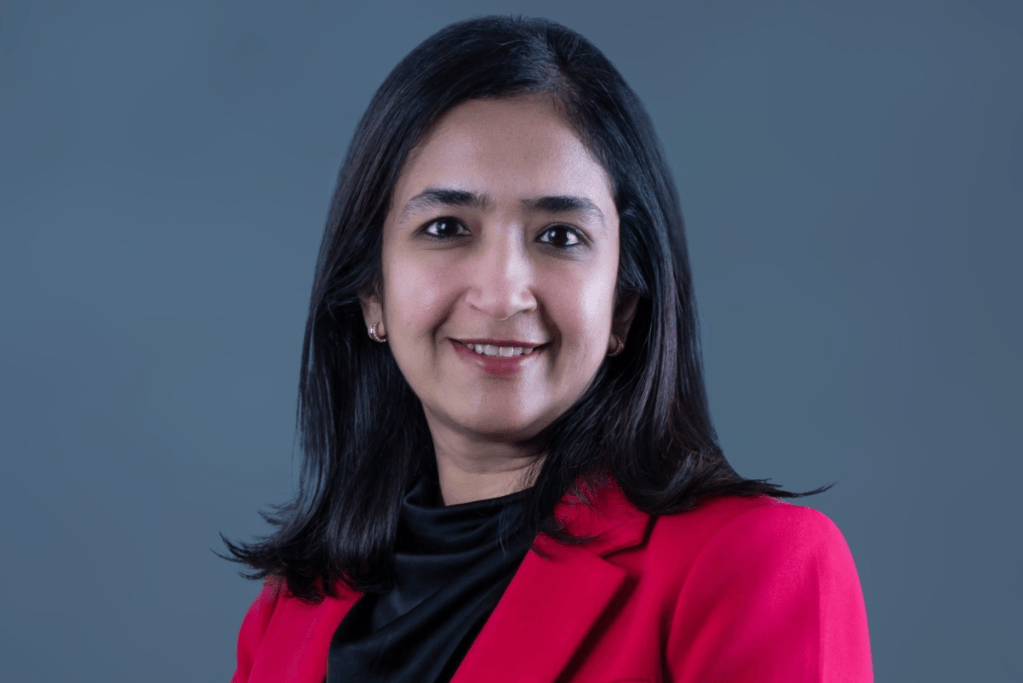
Kami Viswanathan • President – Middle East, Indian Subcontinent and Africa, FedEx
Kami Viswanathan is the President for the Middle East, Indian Subcontinent and Africa at FedEx.