What Happens When Google and AI Become Your First Impression? Sashin Govender Built CredibilityX to Help Shape the Answer
“Social media initially gave entrepreneurs unprecedented control over distribution. Now AI is introducing another layer: reputation is becoming summarizable. That distinction matters.”
You're reading Entrepreneur Middle East, an international franchise of Entrepreneur Media.

There was a time when a first impression happened in a room. It was a handshake, an introduction, a recommendation from someone trusted, or the opening minutes of a meeting. Today, that first impression is increasingly happening before two people ever meet.
An investor considering a founder can search their name before taking the meeting. A customer can research a company before responding to its salesperson. A potential partner can ask an artificial intelligence platform who someone is, what they are known for, whether their company is credible, and what has been written about them. Within seconds, an opinion can begin to form from search results, media coverage, websites, social profiles, reviews, and information scattered across the internet.
The person being researched is not in the room to provide context. Their digital reputation is speaking for them.
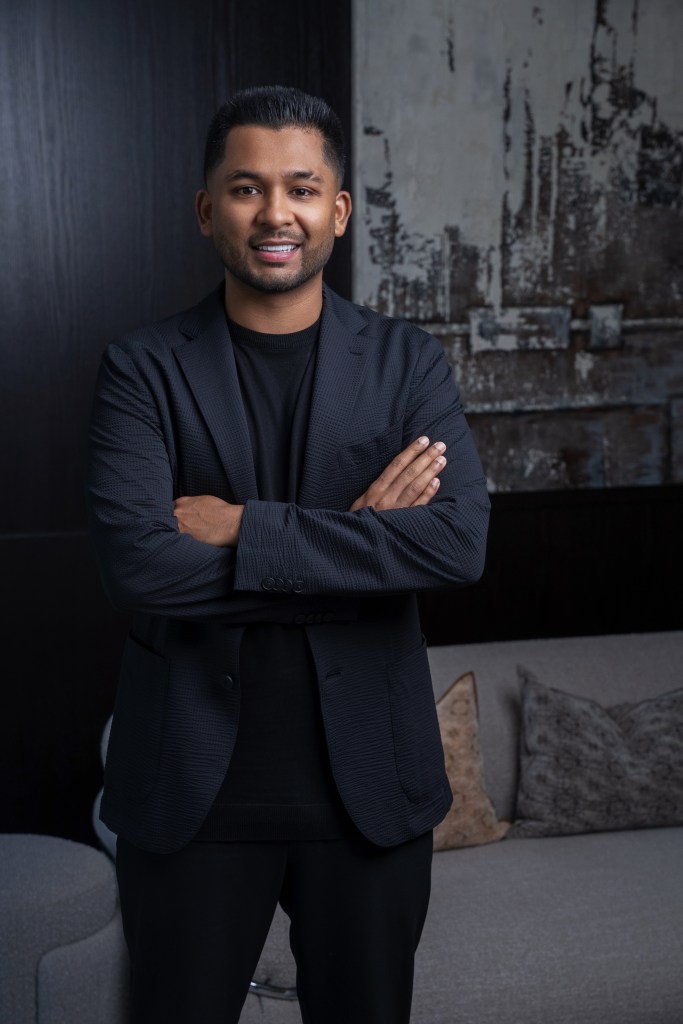
For media mogul, Sashin Govender, founder of CredibilityX, that shift represents one of the most consequential changes taking place in modern business. He believes entrepreneurs have entered an era in which reputation is no longer shaped only by what people say about themselves, but increasingly by what search engines, media ecosystems, and artificial intelligence can discover about them. It is what could be described as the algorithmic first impression.
From Personal Branding to Digital Reputation
For more than a decade, Govender has operated across entrepreneurship, media, marketing, personal branding, and reputation. During that period, he has watched the definition of influence change repeatedly.
Social media initially gave entrepreneurs unprecedented control over distribution. Personal branding turned founders into media properties of their own. Search engines made reputation searchable. Now artificial intelligence is introducing another layer: reputation is becoming summarizable.
That distinction matters.
A polished Instagram account can tell people how someone wants to be perceived. A company website can explain what a business wants customers to know. But when someone searches independently, reads third party coverage, or asks an AI platform about a person or company, they are looking for something different: external context.
Govender believes that gap between what you say about yourself and what the internet can independently verify about you will become increasingly important.
“You can spend years building a great business, but when someone searches you, the internet may only have a few seconds to explain who you are,” he says. “The question entrepreneurs need to start asking is whether that digital version accurately represents the real version.”
That question became increasingly central to the development of CredibilityX.
Building Infrastructure Around Credibility
Rather than positioning itself simply as another public relations agency, CredibilityX has been built around a broader idea: helping individuals and companies strengthen the ecosystem of credible information that exists around their names.
Its work spans media distribution, public relations, reputation management, personal branding, digital content, websites, social media, and other components of online authority. Behind those services is a wholesale media model designed to connect brands, entrepreneurs, agencies, and media opportunities at scale.
Govender describes the philosophy behind the business as closer to infrastructure than traditional agency work. Just as technology platforms reorganized fragmented industries by creating networks between supply and demand, CredibilityX has spent years building relationships across the media landscape and creating an ecosystem through which campaigns can be executed internationally.
That infrastructure now extends across more than 1,500 publication relationships and a global network of agencies and partners, according to the company. But Govender argues that the number of publications is less important than the problem the infrastructure is being built to address.
The internet has become the world’s largest background check. And artificial intelligence may make that background check even faster.

Dubai’s Next Competition May Be Credibility
Nowhere is this shift more visible than in markets such as Dubai.
The city has become a magnet for entrepreneurs, investors, family offices, executives, creators, financial firms, technology companies, and international brands. That concentration of ambition has created extraordinary opportunities, but it has also created intense competition for attention.
In such an environment, simply appearing successful becomes less differentiating. The harder question is whether success can be verified.
Govender believes that as Dubai continues developing into a global centre for entrepreneurship and wealth, one of the next major competitions will be over credibility.
When thousands of founders are competing for investors, customers, partnerships, talent, and attention, reputation becomes economic infrastructure. Two businesses may offer similar products. Two founders may tell equally compelling stories. The advantage can shift toward the person whose authority is easier to understand and independently validate.
“Visibility can get you seen,” Govender says. “Credibility gets you chosen.”
That principle sits at the centre of how he sees the next generation of personal branding.
When Reputation Becomes Machine Readable
The arrival of generative AI makes the subject more complicated.
For years, reputation management largely focused on what appeared when somebody typed a name into Google. Search remains enormously important, but AI platforms are changing how information is consumed. Instead of reviewing ten different links, a user can ask a question and receive a synthesized answer.
This creates an important distinction for entrepreneurs.
No company can legitimately promise complete control over what independent search engines or artificial intelligence platforms say. Their algorithms, sources, ranking systems, and outputs remain outside the control of any individual agency.
What businesses can influence is the quality, consistency, relevance, and authority of the information they contribute to the digital ecosystem.
That means publishing substantive information, earning credible third party coverage, maintaining accurate digital properties, addressing reputation problems, building expertise around relevant subjects, and creating a body of information that helps both humans and machines better understand who a person or company actually is.
In Govender’s view, this will gradually move personal branding away from a competition for followers and toward a competition for authority.
His prediction is provocative: within the next decade, an entrepreneur’s AI reputation could become more valuable than the size of their social media following.
The Five Minute Reputation Test
The implications are surprisingly easy to experience.
Govender encourages entrepreneurs to conduct a simple exercise. Search your full name. Search your company. Search your name alongside the industry in which you want to be considered an authority. Look beyond your own social media accounts and websites.
Then open several leading AI platforms. Ask who you are. Ask what your company does. Ask what you are known for. Ask what distinguishes your business from its competitors.
The most important question comes afterward: Is the person or company being described online an accurate representation of what you have actually built?
For established entrepreneurs, the answer can sometimes be uncomfortable. A business may have significant revenue, customers, employees, intellectual property, or industry experience while possessing remarkably little authoritative information online. Another entrepreneur with fewer accomplishments may have built a far stronger digital footprint.
The internet does not automatically know what you have achieved. It knows what it can find.
The New Economics of Trust
That reality creates both a problem and an opportunity.
Never before have entrepreneurs had so much access to global distribution. A founder in Dubai, Durban, Riyadh, Lagos, London, or Mumbai can build an audience far beyond their physical location. A small company can publish internationally. An unknown entrepreneur can become globally discoverable.
But democratized distribution has also created extraordinary noise. Everyone can post. Everyone can create content. Everyone can call themselves an expert.
Artificial intelligence can now produce more content in minutes than many companies once created in months. In that environment, the scarcity is no longer information. It is trust.
That is the larger opportunity Govender believes CredibilityX is positioned to pursue. The company’s future, in his view, is not simply about generating publicity. It is about helping build the digital evidence surrounding people and businesses whose real world accomplishments may be greater than their online reputations suggest.
For entrepreneurs, that changes the purpose of personal branding itself. The objective is no longer simply to become famous. It is to become understandable, discoverable, credible, and associated with something meaningful.
The next important introduction in business may therefore happen long before someone enters the room. An investor may search your name. A customer may research your company. A journalist may examine your history. A potential partner may ask an AI platform whether you are someone worth meeting.
You will not be there to answer. But your reputation will.
For Govender, that is the future CredibilityX is being built around. In a world where Google and artificial intelligence increasingly influence first impressions, the companies and entrepreneurs that understand how to build genuine digital authority may possess one of the most important competitive advantages of the next decade.
Because the question is no longer only what you say about yourself. It is what the world finds when it goes looking for the answer.
There was a time when a first impression happened in a room. It was a handshake, an introduction, a recommendation from someone trusted, or the opening minutes of a meeting. Today, that first impression is increasingly happening before two people ever meet.
An investor considering a founder can search their name before taking the meeting. A customer can research a company before responding to its salesperson. A potential partner can ask an artificial intelligence platform who someone is, what they are known for, whether their company is credible, and what has been written about them. Within seconds, an opinion can begin to form from search results, media coverage, websites, social profiles, reviews, and information scattered across the internet.
The person being researched is not in the room to provide context. Their digital reputation is speaking for them.

Entrepreneur Middle East Staff
Entrepreneur Staff